
When you walk into a high-end hotel, there’s often a moment where the space feels instantly polished. The bed looks impeccably made, the lighting is softened, and the air somehow feels calm. It isn’t magic.
Many of those details are replicable — and one of them, in particular, explains why so many celebrity homes (and so many hotel rooms) feel better than your average living space. I want to talk with you about that detail, why it works, and how you can use it too.
The symmetry of side tables and lighting
In many luxury hotel rooms you’ll see two nightstands, two matching lamps, two pieces of art above the headboard — everything in a mirror image. The reason is simple: your eyes like balance. When you slap two identical touch points on either side of a bed, sofa or focal piece, the room suddenly feels deliberate rather than accidental. Designers use symmetry to give a sense of custom-tailoredness without expensive custom furnishings.
When you apply that in your own home — for example, two identical lamps on a console table, or matching end tables flanking the couch — the effect is immediate. It doesn’t cost that much (you can pick affordable pieces) yet the perception of “this was planned” goes way up. A symmetrical layout helps make your space feel cleaner, calmer, and more composed.
Matching scale to the furniture
In hotel rooms you rarely see a tiny lamp on an oversized nightstand, or a little side table next to a king-size bed that disappears beneath it. The scale is carefully chosen. That means the lamps are full height, the nightstands broad enough, the art centered above the bed. This gives your eyes anchor points.
In your home this means: don’t choose a lamp that looks like a mini rocket beside a wide dresser. Pick something tall enough. If your nightstand is wide, choose one of matching width or height on the other side of the bed so the spacing feels equal. The hotel effect appears when each side seems balanced.
Centering artworks or headboards above furniture
Hotels often center a piece of artwork or a padded headboard so that the eye has a resting place. This keeps the space from feeling lopsided. When the bed is wide, the headboard stretches across, the art sits above, maybe a mirror or light fixture is centered. The result: the room feels anchored.
If your wall over the bed is blank, or the artwork is hung too high or off-center, your eye may wander and the room feels unsettled. By centering an element, you replicate that hotel-level quality. You don’t need expensive art; just ensure the piece is centered, hung at an appropriate height, and visually tied into the furniture below.
Consistent lighting on both sides
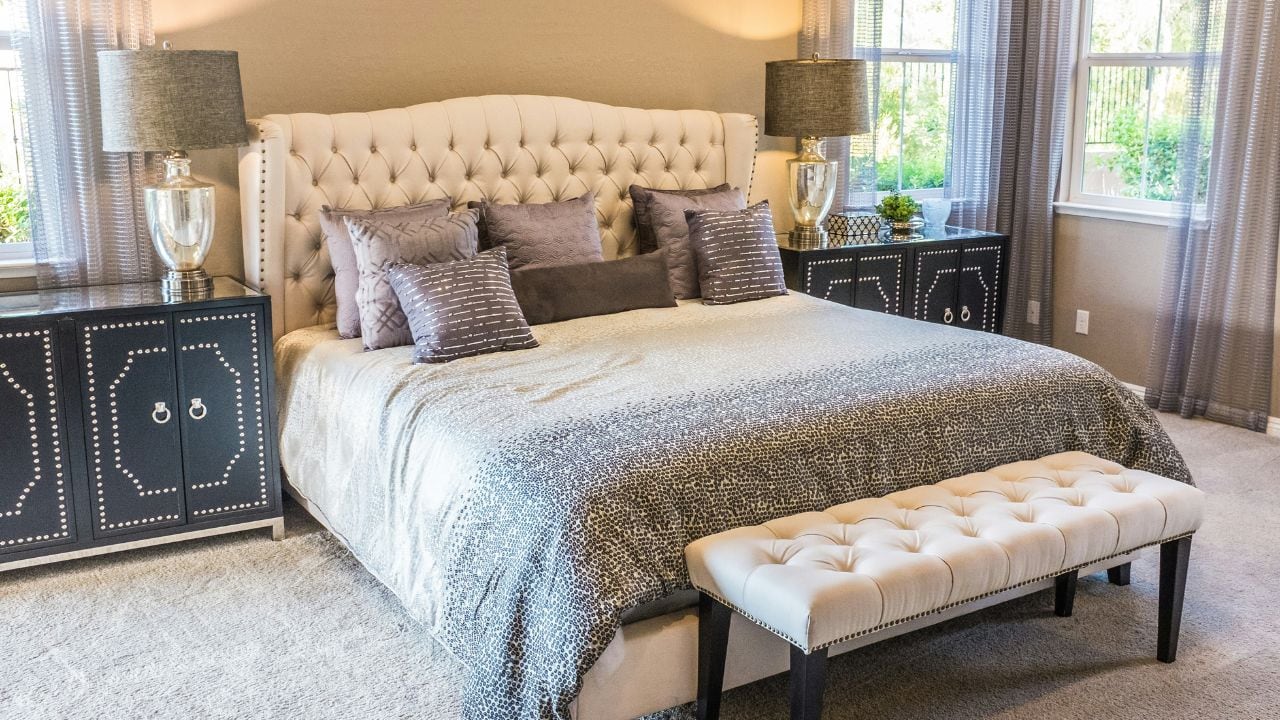
Walking into a hotel room you’ll find either identical lamps or sconces on both sides of the bed. That means both sides can be used equally, which is sensible and gives that lived-in but ordered feel. It also means you won’t end up in darkness on one side while the other is bright.
In your own home, if you have a bed with only one lamp, or a sofa with just one side illuminated, the room feels unbalanced and impersonal. Getting a second lamp (or wall sconce) to match the first gives that sense of completeness. The cost might be modest, but the design upgrade is noticeable.
Aligning decor with the architectural features
Hotels pay close attention to architectural details: maybe a dormer, perhaps a beam, or a ceiling tray. The design aligns furniture and lighting accordingly. If there’s a window centered, the bed is centered. If there’s a ceiling fan, the light fixture is centered. That alignment makes everything look intentional.
At home, you might have the bed pushed off-center to hide a bulkhead, or the sofa off to one side because of a vent. But that misalignment can subtly make the space feel less refined. By moving key furniture to align with the room’s center, and anchoring with matching side tables or lighting, you make the space read as purpose-designed.
Using “matching pairs” for accessories
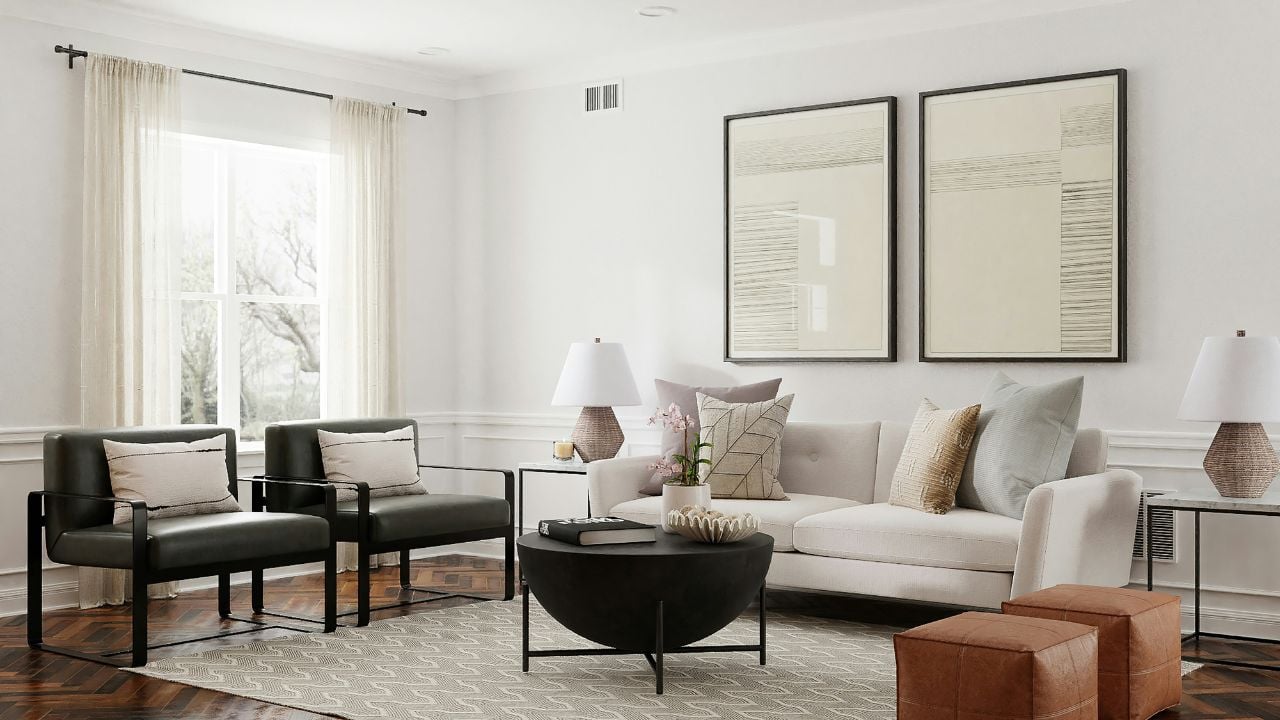
In hotel rooms there’s often two identical rugs, two identical chairs, two identical cushions. The idea is, a pair isn’t perfect symmetry, but it gives a rhythm. That repetition signals thought. In your space, choosing two of something — whether it’s two baskets, two plants in matching pots, two identical ottomans — helps the balance.
You don’t have to fill the room with pairs, but incorporate enough that the room feels cohesive. If your sofa has one cushion that stands out and everything else is different, the effect is fragmentary. Two matching cushions or two identical accent chairs bring harmony.
Why this detail matters more than expensive furniture
Because when you feel like a room is intentional, you perceive higher quality. That’s what hotels harness. You might have moderate furnishings, but when everything aligns, matches, is centered and balanced, it feels elevated. For your home, this means you don’t need to shell out for high-end pieces. Spend your energy placing things right, choosing matching or paired items, and aligning to your architecture. The effect is immediate.
You’ll walk into your space and sense “this works.” Guests will feel it too, even if they can’t put their finger on what changed. The space simply reads cleaner, calmer, more composed. That’s the hotel design secret behind celebrity homes — and you can adapt it at a fraction of the cost.
*This article was developed with AI-powered tools and has been carefully reviewed by our editors.
Leave a Reply