
If you feel like the dollar store total keeps creeping up, you’re not imagining it. Dollar Tree moved beyond the old $1 price years ago and has been rolling out $1.50, $1.75, $2, $3, $5, and $7 tiers, with leadership openly saying multi-price is the new normal.
Family Dollar and Dollar General already mixed price points—and some locations have been dinged for inconsistent scanning/overcharge issues—so your best move now is to stop assuming the dollar store is automatically cheapest and start comparing unit price again.
When the warehouse club usually wins (even if it feels “more expensive”)

- Pantry staples you churn through: rice, beans, flour, sugar, broth, canned tomatoes—club unit prices usually beat dollar-tier packs once you normalize to ounces. Store brands at clubs make the gap bigger.
- Paper goods and trash bags: the “per sheet” or “per bag” math tends to favor multipacks at Sam’s/Costco over smaller dollar-tier bundles.
- Meat in real bulk: large ground-beef chubs, chicken thighs, pork shoulder. Repack and freeze same day. The per-pound difference versus smaller dollar-store or grocery packs adds up fast.
- Butter, cheese blocks, big yogurt tubs: dairy you actually finish before the date almost always prices better at clubs.
Pro tip: keep a short “cheat sheet” in Notes with your best-seen unit prices for 10 things you buy constantly. If the shelf tag/unit price at any store can’t beat your baseline, skip it—even if the sign says “value.” (Dollar Tree’s broader pricing tiers can still be useful for seasonal decor, craft supplies, party goods—just don’t skip the unit math.)
Where the dollar store can still be the better move
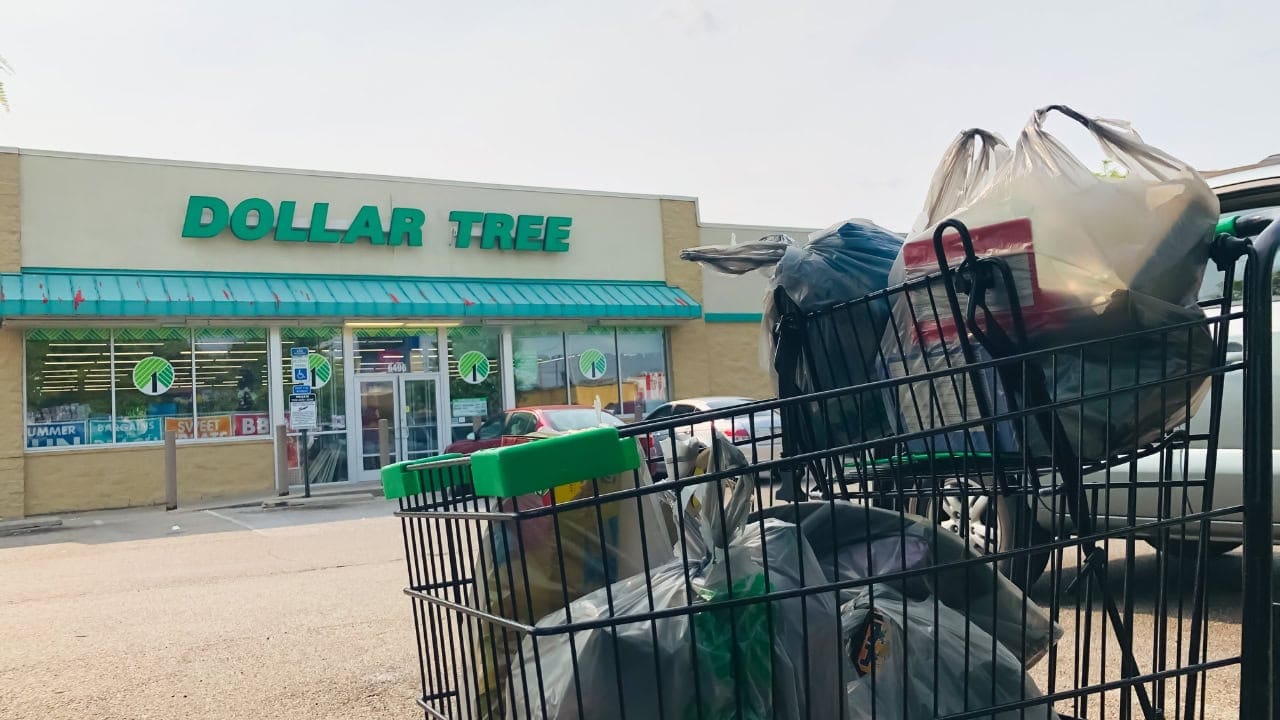
- One-off convenience buys: you need one scrub brush, greeting card, or roll of tape today—not a 12-pack.
- Seasonal/holiday decor & gift wrap: clubs sell big counts; if you’ll only use a little, a smaller pack wins—even with higher unit price.
- Trial sizes you truly need: for travel or testing a product before committing to a club-sized jug.
Guardrails so you’re not gamed by the sticker
- Compare unit price—every time. Multi-price tiers mean two “similar” items can have wildly different per-ounce costs.
- Scan at checkout. Some stores have had scanning accuracy issues; if your total looks off, ask for a price check. (A notorious Family Dollar in Utah failed repeated inspections over overcharges—reminder to watch your receipt.)
- Watch the “value size” trap. If a slightly smaller size at a supermarket with a weekly promo beats the dollar-tier unit price, grab the promo instead.
Dollar stores are great for small quantities and quick solves, but clubs usually win for staples, paper, and protein. Do the unit-price check and keep a baseline list so you know a real deal when you see one. (Yes—this matters more now that Dollar Tree has expanded beyond $1.25 pricing.)
*This article was developed with AI-powered tools and has been carefully reviewed by our editors.
Leave a Reply