
You don’t need built-ins or designer bins to make a room snap into shape. You need a few low-cost tools and a plan for where daily clutter goes. Amazon makes it easy to grab the exact pieces that fix common pain points—overcrowded cabinets, cables everywhere, pantry chaos, and entryway piles—without a full remodel.
The trick is to choose items that create zones and repeatable habits, then keep your palette simple so everything looks like it belongs.
These seven hacks solved real messes at my place and hold up on busy weeks.
Put shelf risers in every short cabinet
Most kitchen cabinets waste the top half of the space. A simple metal or bamboo riser doubles the storage area so mugs, bowls, and canned goods stack without teetering. Measure depth, buy risers that match, and use the same style across a bank of cabinets so it looks intentional. In the pantry, one riser turns a jumble of canned food into two neat rows you can read at a glance.
Extra credit: add one turntable on the same shelf for oils and vinegars. Spills stay contained and you stop knocking bottles over to reach the back.
Use clear bins and labels to build zones
Clear bins are an instant visual system. Assign each bin a job—snacks, baking, breakfast, lunch packing—and label the front. On grocery day, you restock the bin instead of scattering items. In bathrooms, shallow bins corral hair tools, skincare, and first-aid supplies so the cabinet reads tidy even when you’re in a hurry. For kids, a labeled bin for “morning” and one for “night” puts toothbrushes, hair ties, and lotion right where they’re needed.
Keep labels simple and neutral. The look stays calm and you can repurpose bins without peeling sticky residue later.
Add lazy susans to corners and crowd-prone counters

Turntables fix blind corners in pantries and bring small items to the front without a reach. A 10–12 inch size works for spices, baking extracts, or condiments. On bathroom counters, a low, clear turntable keeps skincare upright and easy to wipe clean. In the fridge, one larger turntable turns sauce chaos into a neat carousel. You stop buying duplicates because you can finally see everything.
Choose turntables with raised edges and no center lip so bottles don’t fall over when you spin.
Tame cables with adhesive clips and a single charging tray
Cords make even a clean room look messy. Stick small adhesive cable clips to the back of nightstands and desks so charging cords park in the same spot every time. Add a simple charging tray or a multi-port block and run every device to that one station. In the living room, tuck a slim cable box behind the TV to contain the surge protector and extra length of cords. The floor looks clear and vacuuming stops being a cord maze.
Buy clips in a color that matches your furniture so they disappear visually.
Give every door a job with an over-the-door rack
Vertical space is free storage. Over-the-door racks in pantries hold wraps, foil, snacks, and lunchboxes. In bathrooms, use them for towels and backup toiletries. In kids’ rooms, pockets hold socks, small toys, and art supplies. The entry closet gets umbrellas, hats, and dog leashes. You gain a whole shelf without drilling holes or committing to a layout you might change.
Measure door clearance and pick low-profile hardware if your doors are tight to the frame.
Use drawer dividers so small things stop floating
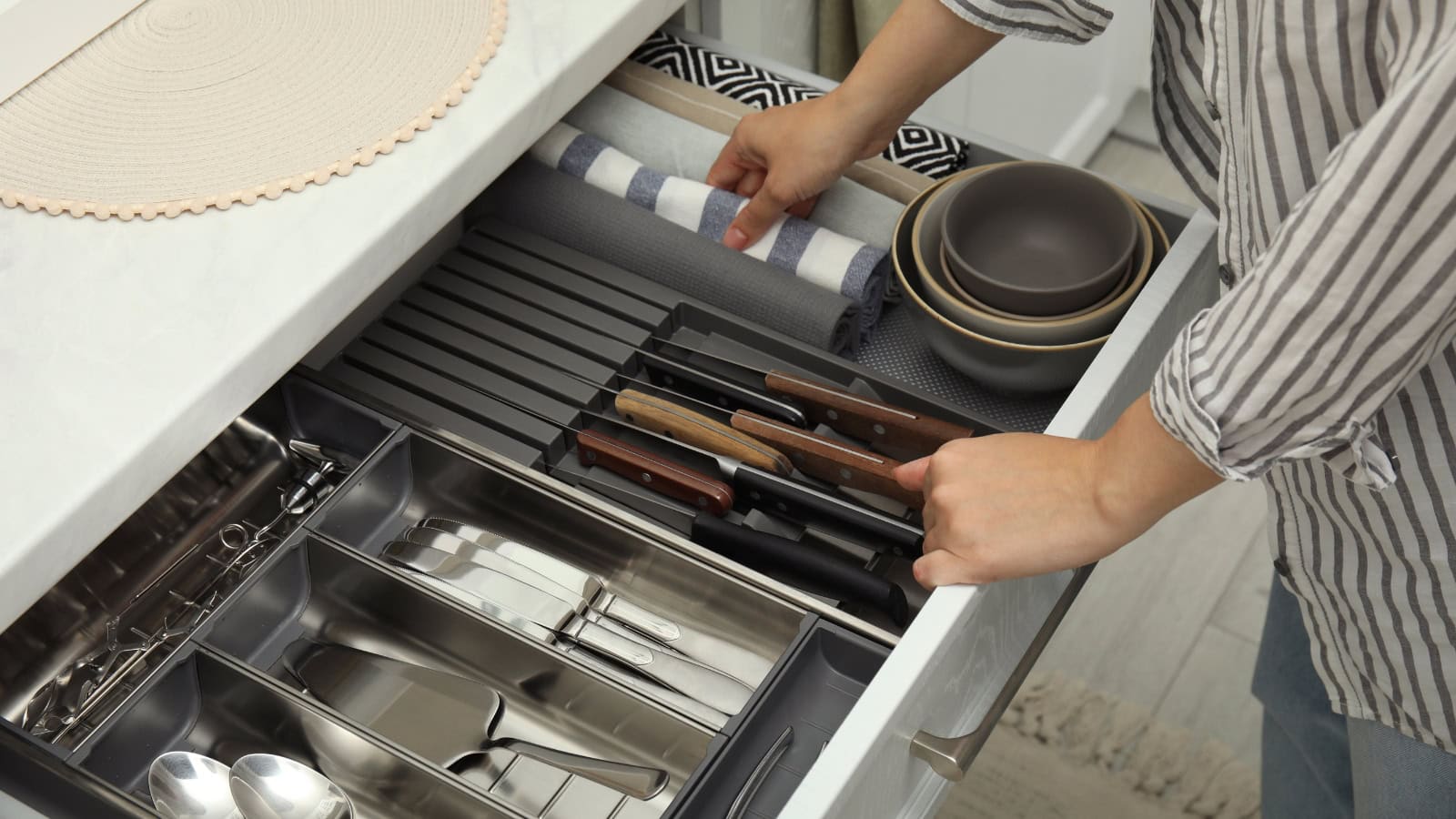
Expandable dividers turn deep drawers into tidy lanes. In kitchens, split a junk drawer into sections for batteries, tools, and tape so you can actually find what you own. In dressers, divide underwear, socks, and workout gear so piles don’t slide around and explode the minute you pull one item. For kids, dividers let you file-fold shirts so morning outfits appear without digging.
Stick to wood or clear dividers across a room for a consistent look. Mixed materials make drawers feel busy even when they’re organized.
Swap random catch-alls for labeled zip pouches
Transparent zip pouches beat mystery baskets every time. Make one pouch for travel chargers, one for small first-aid items, one for receipts you actually need to keep, and one for the car. They stack in a single bin on a shelf, and you can grab the exact pouch you need instead of dumping a basket on the floor. For crafts and kids’ activities, pouches keep puzzle pieces, crayons, and game cards together and visible.
If a pouch starts to swell with “miscellaneous,” give those items their own category or admit you don’t need them and donate or toss.
How to deploy the hacks so your home actually stays tidy
Pick one room and one pain point. Install the fix in 15 minutes, live with it for two days, then fine-tune. Don’t buy all the things and hope the layout reveals itself—assign every tool a job. Keep a consistent palette (clear, white, bamboo) so the system looks like a set even if pieces came from different listings. Once a week, do a two-minute reset per zone: push everything back into its bin, spin the turntables, and toss obvious trash.
The result is a house that looks cleaner because every item has a home and your surfaces are calm. You haven’t added furniture or hidden life behind doors—you’ve built small lanes that your family can keep up with on busy days.
*This article was developed with AI-powered tools and has been carefully reviewed by our editors.
Leave a Reply